Do Squats Work Your Core? Not the Way You Think
- James Swift
- Apr 6
- 5 min read
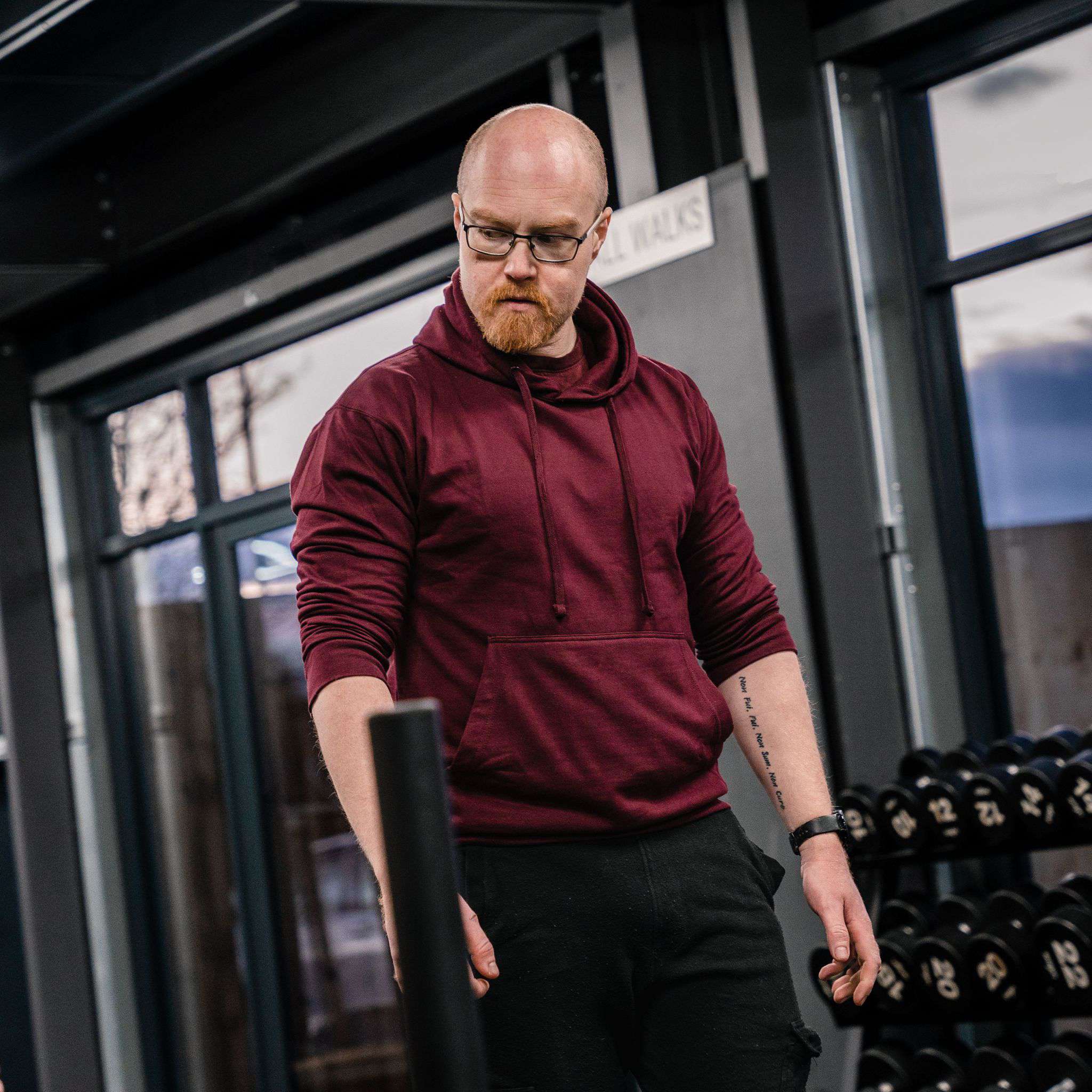

You can have a visible six-pack and a back that rounds the moment you pull heavy. I know this because it happened to me.
The fitness industry has two competing myths about core training, and both of them are wrong. The first says that heavy compound lifts are all the core work you need. The second says that crunches and planks will build a midsection that performs under load. Neither is true, because both treat the core as a single structure with a single function. It is not. Until you understand what your core actually is, anatomically, you will keep training half of it and wondering why the other half fails.
The Core Is Not One Muscle
The word "core" is used as though it describes one thing. It describes at least four.
The transverse abdominis is the deepest layer of the abdominal wall. Its fibres run horizontally, wrapping around your trunk like a corset. Its job is to generate intra-abdominal pressure, which stabilises the spine under axial load. When you brace for a heavy squat or deadlift, the transverse abdominis is the primary driver of that rigidity.
The internal and external obliques sit above the transverse abdominis and run diagonally. They produce and resist rotation, manage lateral stability, and contribute to the bracing mechanism alongside the transverse abdominis.
The rectus abdominis is the superficial muscle that produces the visible "six-pack." Its fibres run vertically from the ribcage to the pelvis. Its mechanical function is trunk flexion: bringing the ribcage toward the pelvis under load, or resisting extension when an external force tries to pull the spine into hyperextension.
These muscles have different fibre orientations, different mechanical functions, and different training requirements. "Core" is an anatomical category, not a single muscle. Treating it as one is where the myth begins.
How Heavy Squats Actually Work Your Core
Squats and deadlifts work your core by demanding isometric bracing. You take a breath, contract the transverse abdominis and obliques against your abdominal wall (or against a belt), and generate intra-abdominal pressure that stabilises the spine. This is the Valsalva manoeuvre, and it is essential for safe heavy lifting.
Heavy compounds develop this capacity effectively. The transverse abdominis gets stronger. The obliques get stronger. The spinal erectors get stronger. Over months of progressive overload, your ability to stabilise under heavier and heavier axial loads improves measurably.
What does not happen is dynamic trunk flexion. The rectus abdominis acts as a stabiliser during these movements. It holds its position isometrically. It does not shorten under load. It does not produce force through a range of motion. It braces.
Isometric contraction and concentric contraction are fundamentally different mechanical demands. They produce fundamentally different adaptations. A muscle trained only to hold still does not develop the same capacity as a muscle trained to produce force through its full range.
Heavy compounds train your core to resist movement. They do not train your core to move. Both capacities matter.
What I Learned the Hard Way
I spent years building a midsection that looked strong. Isolation work, cable crunches, leg raises. The rectus abdominis was developed. Visually, the core looked like it belonged to someone who could handle a heavy barbell.
It could not. When I started pulling heavy, my back rounded. Not because my erectors were weak, and not because I lacked the flexibility to maintain position. The deep stabilisers, the transverse abdominis, the bracing architecture that holds the spine rigid under load, had never been trained to do the job that heavy pulling demands. I had built the surface and ignored the foundation.
The six-pack muscle was strong in trunk flexion. The core as a system was not strong enough to keep my lumbar spine in extension while 200 kilograms tried to flex it. These are different problems requiring different solutions, and no amount of crunches was going to fix a bracing deficit.
I had a core that looked strong. It could not keep my back straight under a heavy deadlift. Looking strong and being strong are not the same thing when the demands are different.
The Myth Fails in Both Directions
The standard version of this myth says, "heavy squats build your whole core." My experience proves the opposite direction is equally false isolated work builds a visible core that cannot stabilise under load.
Neither approach alone builds a complete midsection. Compounds without isolation leave you with bracing capacity but no dynamic trunk strength. You can stabilise a heavy squat, but you cannot produce rotational force, transfer power between your lower and upper body in sport, or maintain anti-extension endurance across high-rep sets where fatigue erodes your brace.
Isolation without compounds leaves you with a six-pack that folds the moment a barbell loads the spine. The rectus abdominis can flex, but the transverse abdominis cannot hold.
A lifter who only braces has a core built for one context. A lifter who only crunches has a core built for a different single context. Both are incomplete. Both will eventually hit a ceiling that the other type of training would have removed.
The myth fails because it assumes one type of training covers both functions. It does not. The anatomy does not allow it.
What to Do About It
Train both functions deliberately. The programme loaded dynamic trunk flexion and anti-rotation work alongside your compound lifts. Not instead of. Alongside.
Cable crunches train the rectus abdominis through its full range under progressive load. Hanging leg raises train trunk flexion from the opposite anchor point. Ab wheel rollouts demand both eccentric control and concentric trunk flexion against significant resistance. Pallof presses train the obliques to resist rotation under load, which is a capacity that neither squats nor crunches develop.
Program these as accessory work after your main lifts, two to three sessions per week. Apply progressive overload the same way you apply it to your squat or your press: add load or reps systematically over time, track the numbers, and force adaptation. The same principles of mechanical tension that govern barbell strength govern core development. There is no reason to treat the midsection as a special case that only deserves bodyweight circuits and 60-second planks.
If your core training has no measurable progression built into it, it is not training. It is going through the motions.
Train your core the way you train everything else. Progressive overload, measurable load increases, and a specific mechanical goal for each movement.
How to Find Out What Your Core Is Actually Missing
If your squat is stalling, your deadlift rounds under load, or you suspect your midsection is limiting your barbell performance, the question is which part of the core is the weak link. The £50 Strength Diagnostic assesses not just your main lifts but the supporting structures that govern them, including trunk stability and dynamic core function.
Book your Diagnostic at jamesswift.uk/offer.
Training remotely? The Digital Rack programmes accessory work, including core, as part of your overall strength plan. Details at jamesswift.uk/online-coaching.


Comments